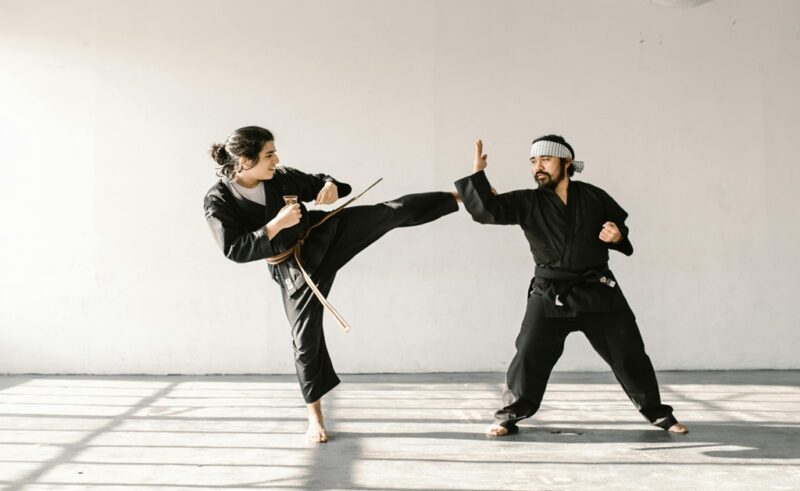
Martial arts training has become a common exercise routine for people in the United States since it provides training on self-defense while helping individuals develop self-discipline. There is a yearly rise in the number of people who practice martial arts, from children in training classes to adults in martial arts competitions. One who practices martial arts acquires physical strength and confidence from the training, but sometimes people worry about the risk to their teeth and mouth.
A sudden strike, fall, or accidental elbow can quickly turn into a dental emergency. Families maintain their dental health through established relationships with a general dental clinic in Oklahoma City, which provides residents with prompt and professional dental services.
Let’s explore the five most common causes of oral injuries in martial arts and how you can prevent them!
1. Direct Blows to the Face
Did you ever experience a hit that felt stronger than you anticipated? Direct impact serves as the principal reason for oral injuries that occur during martial arts practice. Athletes who take part in karate, taekwondo, boxing, and mixed martial arts are more likely to get dental injuries due to head impacts caused by punches and kicks from their opponents. There are safety measures in place to prevent accidents, but they still occur.
An ill-timed block or an unexpected movement may result in a strong blow to the mouth. The absence of mouthguard protection results in an increased risk of dental injuries. The use of a custom-fitted mouthguard provides many benefits, which include shock absorption and decreased risk for severe injuries.
2. Accidental Collisions During Sparring
The sparring activities are meant to improve technical proficiency as well as reaction time. Rapid transitions between the two individuals may lead to scenarios where accidental headbutts and elbow strikes occur. The impact that develops from these scenarios may look harmless, but it has the potential to result in injuries to the teeth and jaw.
Have you ever experienced jaw pain following your training sessions? The discomfort you feel indicates that you sustained a small injury. Dental checkups performed at regular intervals at a general dental clinic enable dentists to find concealed dental issues that require treatment before they develop into severe conditions.
3. Falls and Improper Landing
Most martial arts have throws, takedowns, and grappling. For judo and Brazilian jiu-jitsu, mat falls are used as the primary method of fighting. Landing incorrectly or hitting one’s face on the floor can lead to a broken jaw and dental fractures.
Beginners must first learn how to fall properly. This is the first step in training. Coaches attempt to teach athletes how to land correctly, but due to fatigue and inexperience, athletes can still land incorrectly. The more training and use of protective gear, the less chance of injury, but a person must be aware of their surroundings for security.
4. Lack of Protective Gear
Athletes who engage in light training without protective equipment feel they can avoid risky situations. Many cases of oral injuries occur during practice sessions and not during competition.
A mouthguard that fits properly can protect against impact, which in turn protects both hard and soft tissues in the mouth. Some sports require the use of headgear to protect players from facial injuries. The expense of buying high-quality protective gear remains cheaper than the costs of dental treatment for future tooth damage.
5. Overconfidence and Aggressive Training
The development of skills causes an increase in confidence levels, which sometimes translates to more forceful sparring practice. Too much training without proper control measures increases the chances of getting injured. The advanced students can train at higher levels of intensity, which causes them to deliver stronger strikes while moving at faster speeds.
The training program requires you to select between several options for your training methods. The foundation for preventing oral injuries relies on three key elements, which are discipline, safety rule observance, and training partner respect. Coaches and instructors should emphasize technique over force to keep everyone safe.
Conclusion
Martial arts offer strength and discipline training, but without appropriate care, there is a possibility of mouth injury. The use of protective equipment and safe training practices, combined with regular dental check-ups, forms a good system for preventing injuries. A general dental clinic in Oklahoma City will also offer emergency services to the residents who require immediate dental attention following an accident that may have endangered their smile!